New Paper: Space Weather and Human Affairs — An Honest Reassessment
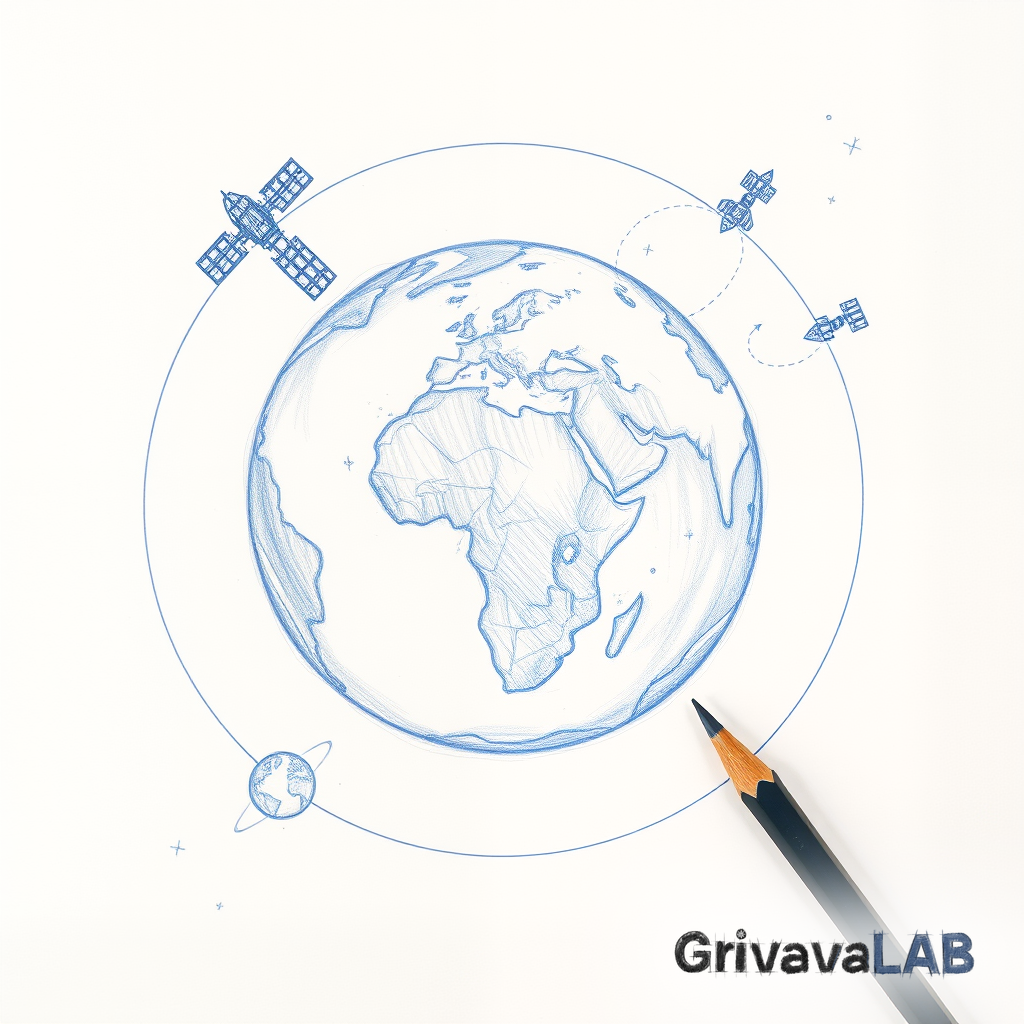
We've published a paper setting out, plainly, what GrivavaLAB has found and where it is going.
Read and cite it: 10.5281/zenodo.24221341 — open access, CC-BY-4.0.
The argument
Claims that solar and geomagnetic activity shape human health, mood and behaviour run from cautious epidemiology all the way to astrology. The paper reassesses that evidence honestly and reaches a clear conclusion:
- Across our own reproducible studies — epilepsy, cortisol, behavioural and social proxies over thousands of days — we find no credible, robust link between space weather and human affairs. Initial correlations dissolve under detrending, multiple-comparison control, or robustness testing.
- The recurring "discoveries" in this field are explained by method, not nature: untested multiple comparisons, shared seasonality, Simpson's paradox, and publication bias.
- The honest distinction: space weather is real and consequential for technology and physics — satellites, GNSS, power grids, radio, aviation, astronaut radiation, all measured and forecastable — but the data do not show that it governs human will. It is not astrology.
- A null result, published openly, is worth as much as a positive one. So we keep testing, in the open, with a continuous observatory that reports the signal and its absence with equal clarity.
Citation
GrivavaLAB (2026). Space Weather and Human Affairs: An Honest Reassessment, and the Case for a Continuous Open Observatory. Zenodo. https://doi.org/10.5281/zenodo.24221341
Correlation is not causation; we test, we do not prove. All data from public, open-access sources. More in Methodology and Publications.